
Laboratory Testing Equipment for
Rubber, Plastics & Masterbatch Industries
Comprehensive precision instruments for color measurement, appearance evaluation, weathering testing, and digital quality management — from raw material inspection to final product validation.
The plastics, rubber, and masterbatch industries play a fundamental role in modern manufacturing, supplying materials and components for automotive, packaging, construction, electronics, medical devices, consumer products, household appliances, and industrial applications. As product designs become increasingly sophisticated and customer expectations continue to rise, manufacturers face growing pressure to maintain consistent appearance, color accuracy, material performance, and production efficiency.
Whether producing injection molded parts, extruded profiles, plastic films, engineering polymers, rubber compounds, recycled materials, or color masterbatches, manufacturers must carefully control both functional and aesthetic properties. Variations in color, gloss, transparency, haze, pigment dispersion, surface appearance, or material consistency can result in product rejection, customer complaints, increased production costs, and reduced process efficiency.
Advanced laboratory testing equipment enables manufacturers to monitor quality throughout the entire production cycle, from raw material inspection and formulation development to process control and final product validation.
At InnovLab Solutions, we provide comprehensive testing solutions from leading manufacturers including BYK-Gardner and Cofomegra to support polymer producers, compounders, masterbatch manufacturers, processors, and quality control laboratories.
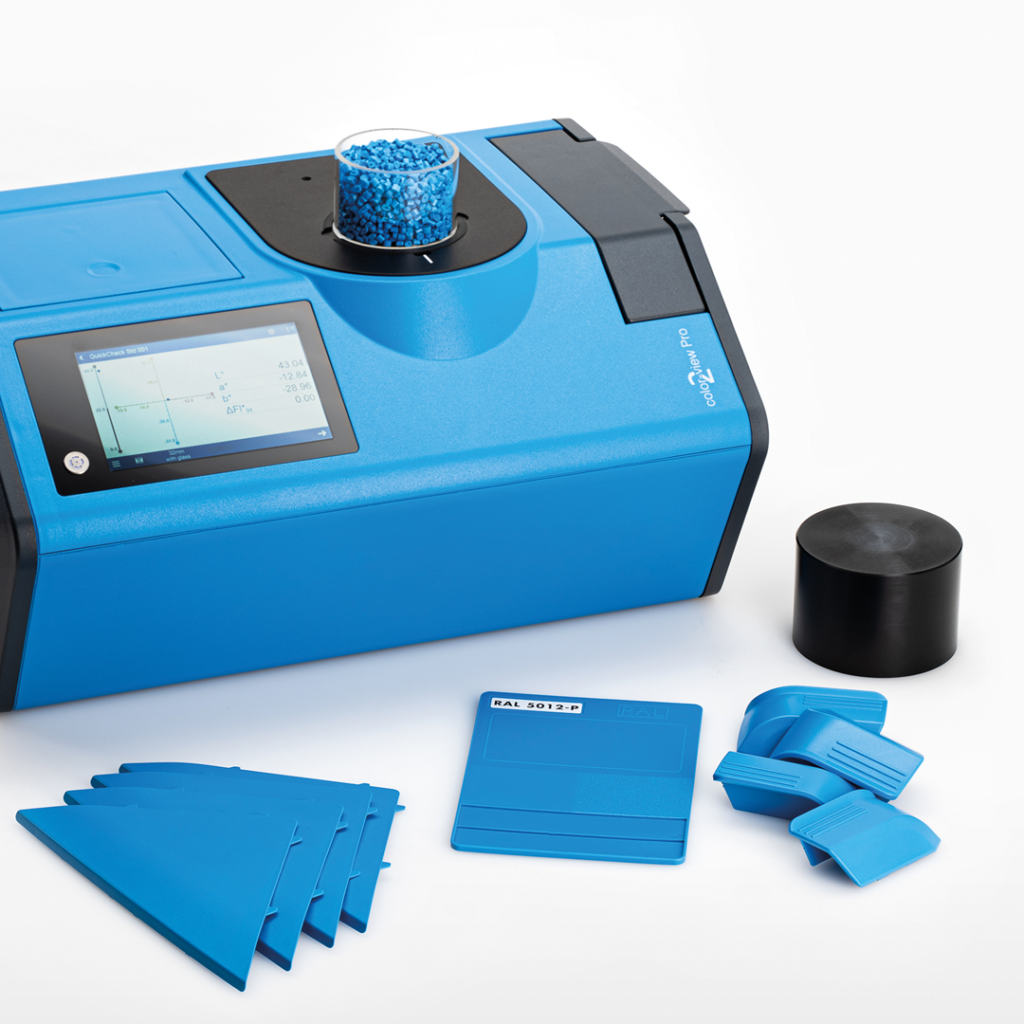
Color Measurement and Masterbatch Quality Control
Spectrophotometers & multi-angle systems for color, special-effect pigments, and batch consistency
Color consistency is a key quality requirement in plastics and masterbatch production. Manufacturers must ensure that every batch matches the target color while controlling pigment concentration, dispersion quality, color strength, and batch-to-batch consistency. Accurate color measurement reduces waste, improves efficiency, and maintains product quality.
Many plastic products also use metallic, pearlescent, and special-effect pigments to create distinctive appearances in automotive, electronics, cosmetic packaging, household appliances, and decorative applications.
Advanced spectrophotometers and multi-angle color measurement systems evaluate color differences, opacity, color strength, whiteness, yellowness, metallic appearance, sparkle, graininess, pearlescent effects, and color travel, helping manufacturers ensure consistent color and appearance throughout production and global supply chains.
- ASTM D2244
- ASTM E308
- ASTM E1164
- ASTM E2194
- SAE J1545
- ISO 7724
- DIN 5033
- DIN 6174
- DIN 6175-2
- DIN EN ISO 11664
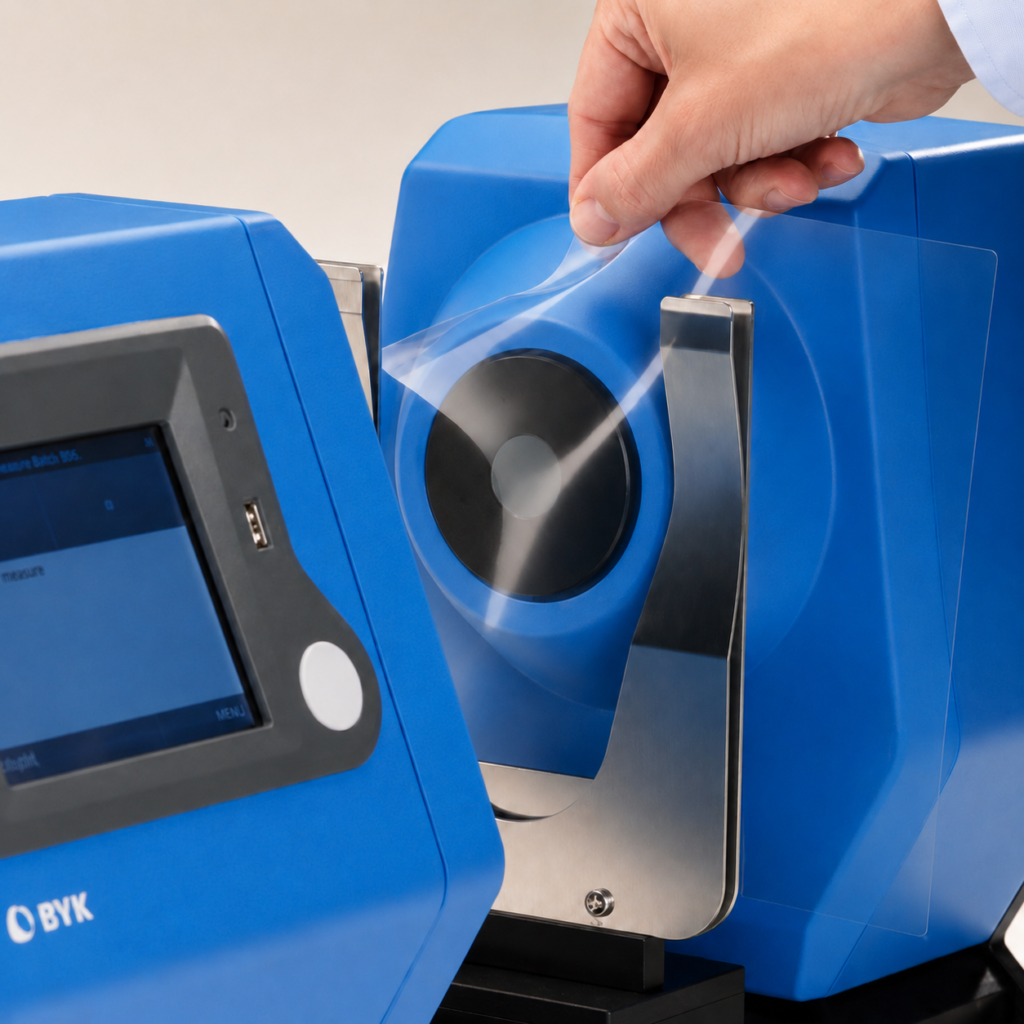
Appearance, Haze and Transparency Evaluation
Optical measurement for films, sheets, packaging, lenses, displays, and transparent components
Visual appearance is a key quality attribute for transparent and semi-transparent plastic products. Customers often evaluate product quality based on clarity, transparency, haze, gloss, and overall surface appearance.
Manufacturers of films, sheets, packaging materials, lenses, displays, and transparent components require objective measurement systems capable of quantifying optical properties that cannot be reliably assessed through visual inspection alone. Advanced haze and transparency measurement systems provide accurate evaluation of light transmission, haze, clarity, and optical quality while supporting product development and quality assurance activities.
Gloss significantly influences customer perception of product quality. High-gloss and low-gloss plastic surfaces require accurate measurement and process control to maintain consistent visual appearance. Gloss measurement plays an important role in automotive interior components, electronic housings, appliance surfaces, packaging materials, and decorative plastic products.
- ASTM D1003
- ASTM E430
- ISO 13468
- ISO 14782
- ASTM D523
- ISO 2813
- DIN 67530
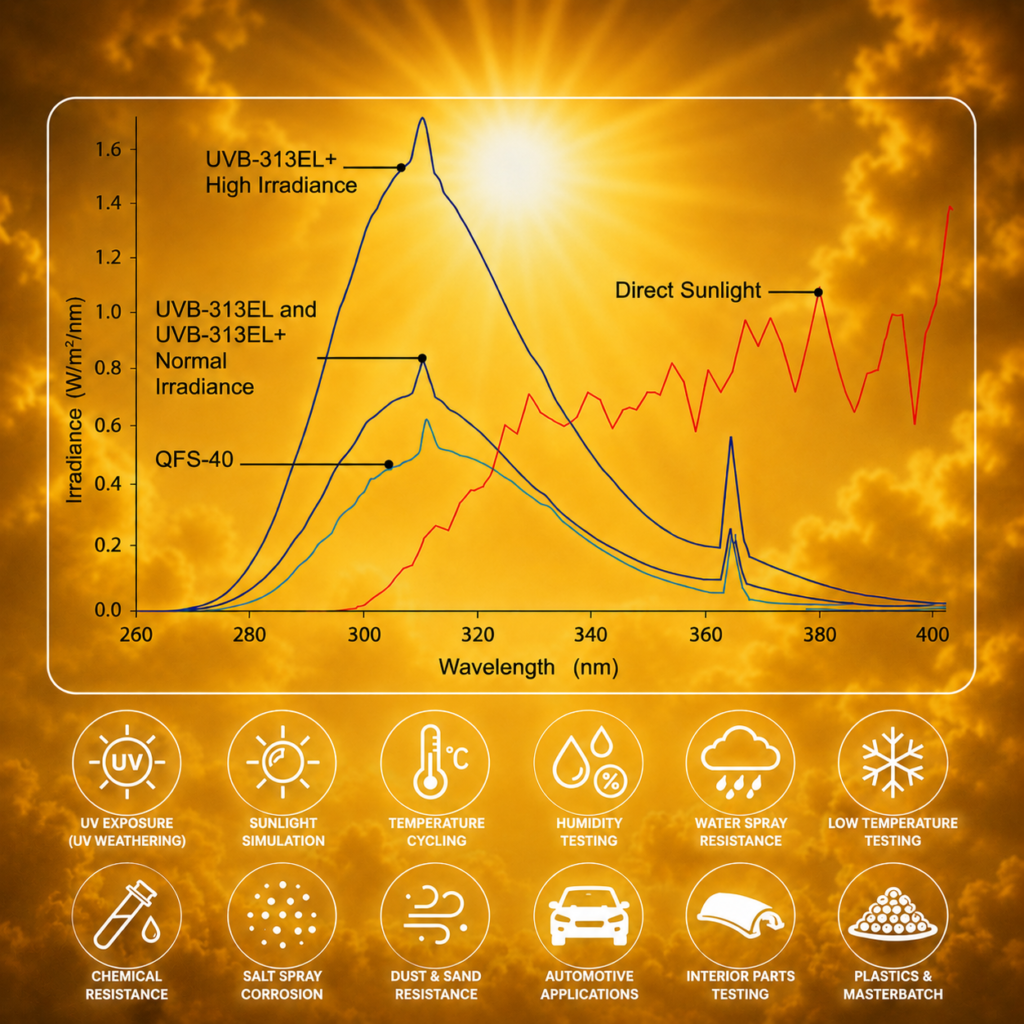
Environmental Durability and Weathering Testing
Multi-angle spectrophotometry · metallic · pearlescent · special-effect finishes
Plastic materials, rubber compounds, and masterbatch formulations are frequently exposed to sunlight, ultraviolet radiation, temperature fluctuations, humidity, and other environmental conditions throughout their service life. These factors can significantly affect color stability, gloss retention, mechanical performance, and long-term durability.
Manufacturers must evaluate how materials behave under accelerated aging conditions to ensure consistent performance in outdoor and demanding applications. Weathering and environmental durability testing helps predict long-term material behavior, validate product performance, and support material selection during product development.
Accelerated exposure systems simulate years of outdoor weathering within controlled laboratory conditions, allowing manufacturers to evaluate color fading, gloss reduction, yellowing, embrittlement, cracking, chalking, and surface degradation.
- ASTM G154
- ASTM G155
- ISO 4892
- SAE J2527
- SAE J2412

Digital Quality Management Solutions
Centralized data analysis · SPC · standardized appearance evaluation across global supply chains
Digital quality management platforms transform measurement data into actionable process intelligence, enabling manufacturers to monitor product quality in real time across production lines, laboratories, and multiple manufacturing sites. Centralized data collection and automated reporting improve transparency, reduce manual data handling, and provide immediate access to critical quality information throughout the organization.
Integrated trend analysis, statistical process control (SPC), and process monitoring tools help identify variations before they become production issues. By connecting quality data from suppliers, production facilities, and quality control laboratories, manufacturers can improve consistency, support continuous improvement initiatives, and ensure compliance with demanding automotive quality standards across the entire supply chain.
Advanced software solutions also facilitate standardized appearance evaluation by consolidating color, gloss, haze, DOI, and other appearance measurements into a single digital environment. Shared specifications, automated pass/fail criteria, and centralized databases help ensure that quality requirements are applied consistently regardless of production location or inspection point.
In addition, digital quality systems support traceability and data-driven decision making by maintaining comprehensive records of measurement results, production batches, and process parameters. This enables faster root-cause analysis, simplifies audits, and provides valuable insights for process optimization, helping manufacturers reduce waste, improve efficiency, and maintain consistent product quality on a global scale.
Need a complete laboratory solution for plastics or masterbatch?
InnovLab Solutions provides integrated testing equipment packages covering every stage of the production cycle — from raw material inspection and R&D through process control and final product validation.